


In-Person,
4-day Trainings
in Africa


Training Fee
International NGOs and Affiliated
EUR 700 p.P*
National NGOs from Africa
EUR 350 p.P*
* MODE OF PAYMENT: Pay online or through direct bank transfer | DISCOUNTS: 10% off for groups of 3 or more, 20% off for Early Bird registration | Read: Terms & Conditions
The In-Person Trainings includes
24 hours of training, split into four days into sixteen sessions | A package with all the training material | Impact Training Certificate Leadership and Team Management | Lunch, drinks and snack
What sets us apart
Our work is guided by a simple principle: Head, Heart, and Hand.
The Head stands for clear thinking and proven content, the Heart for care, reflection, and purpose, and the Hand for practical, well-designed facilitation that turns learning into action.
Proven and Impactful Content

-
A rich and growing toolbox – creative, practical tools and methods, many of which are openly published and widely used beyond our work.
-
Deep insight into civil society – shaped by over 10 years of coaching, training, and long-term work with thousands of civil society leaders and practitioners.
-
Rooted in real leadership experience – our team brings first-hand experience from working in the sector, including in senior roles.
-
Continuously improved – we learn from participants and feedback and regularly refine our content.
Care for People and Purpose

-
Individualised support – we care for each person and adapt our support to their context, role, and challenges.
-
Reflection as a driver of change – our facilitation includes reflection, awareness, and peer exchange, because change starts with self-reflection.
-
Trust-based relationships – we build personal, trustful relationships that go beyond a single training or service.
-
Commitment to a strong social fabric – we see civil society actors as essential and feel responsible for supporting their work.
Outstanding Facilitation

-
Highly experienced facilitators – professional facilitators with experience from hundreds of workshops, trainings, and processes.
-
Engaging, participatory methods – no PowerPoint; instead, we use discussions, role plays, case studies, reflection, games, and creative formats.
-
Well-prepared and well-managed processes – our trainings and facilitation processes are carefully designed, structured, and well timed.
-
Goal-oriented and adaptive – we balance participants’ needs with clear objectives to achieve meaningful outcomes.
Our Facilitators

Helina Yigletu
Topics: Leadership, Human rights based Approach, Social Accountability
Helina’s eclectic skillset and interests have led her on a meandering path cutting across a global consulting firm, a publishing collective, a feminist social enterprise, and organizations working in the development sector.
As a Coordinator for CSA Africa, she worked on gradually nurturing the entity into an impactful changemaker in the local civil society ecosystem and beyond. She values the inspired vision and progressive values of CSA and finds herself at home in training spaces where collective knowledge is woven into meaningful strategy. She spends the rest of her time on creative outlets and cultivating meaning, knowledge, and connection. xx


Joachim Schwarz
Topics: Leadership, Coaching, Social Innovation, Advocacy,
Multi-Actor Partnerships
Joachim is passionate about social justice and co-creation. In 2014, he left his NGO career to embark on a mission to support civil society actors and social entrepreneurs in becoming more powerful and innovative. Together with his colleagues, he founded the Civil Society Academy, which began its journey in India and later expanded to many parts of the world. In 2023, Joachim established Civil Society Academy International as a social enterprise in Germany.
With more than 25 years of experience across Africa and Asia, he brings deep insight into the realities and potential of social change.
Joachim is an outstanding trainer and coach who loves facilitating collective processes that are creative, fun, and deeply impactful. His work focuses on leadership, culture, innovation, and strategy — always with a strong commitment to empowering disadvantaged groups. Now based in Berlin, he continues to inspire and support changemakers worldwide.

Jonathan Tusubira
Topics: Advocacy, Human Rights-based Approach,
Journalism
Jonathan is an award-winning Innovator, Civic Journalist, Trainer and consultant in the areas of Human Rights, Media Development, Media Literacy and Good Governance in Africa. Over the last 15 years of his career, he has consulted for the Ford Foundation/Uganda Land Alliance, Disability Rights Fund, DW (Deutsche Welle) Akademie, and Boehm Gladen Foundation, among others.
One of Jonathan’s social innovations aims at creating more spaces for diverse voices in the media and gives leaders an opportunity to listen to their citizens, and generally make better decisions. He believes that a community without a voice breeds disorder, suspicion, and a lack of public trust.
_edited_edited.jpg)
JUDITH BAKWANGIRA
Topics: Leadership and team Management, Organizational Development, mental Health practioner
Judith is a member of International Association of Facilitators (IAF), Vice chairperson of IAF Uganda Chapter, She is a passionate facilitator that adepts to fostering collaborative environments, enhancing communication, and guiding group/team processes. With 15 years of working with NGOs/INGOs in Uganda, she has expertise in project management, leadership and team management training, youth development and empowerment, soft skills training, social inclusion and community development.
She empowers individuals, organizations to navigate personal challenges, build resilience, and achieve goals and objectives as a team. As an organizational development practitioner, she optimizes systems and fosters cultures for effectiveness. Additionally, as a project management expert she ensures successful execution, timely delivery, and alignment with organizational objectives, fostering sustainable development and teamwork.
.jpg)
Retta Menberu
Topics: Leadership, Advocacy, Human Rights Based Approach
Retta Menberu Woldetsadik (M.D., MSc) stands up for civil society-state dynamics, good governance, advocacy, and a rights-based approach to development. Since 2018 he has been part of CSA, built up, and leads the Africa office to advocate for change and empower the youth. After working more than two decades in development and health leadership, as a trainer, researcher, and consultant in clinical medicine and public health, Retta developed himself to a broader development leadership and facilitation role by operating as Country Director for ActionAid International, and as regional Strategy Adviser for Rush Foundation.
He works as a coordinator, researcher, adviser, and facilitator for international development and humanitarian organizations, alliances, and multi-actor partnerships in diverse contexts across Africa, Asia, and Europe.

Sohini paul
Topics: Leadership, Social Accountability, Advocacy,
Human Rights-Based Approach, Coaching
Sohini Paul brings over thirty years of experience in the development sector, grounded in a strong social science background. She holds a master’s degree in Geography and Regional Planning and is a certified Life and Leadership Coach. Her work combines analytical rigour with a deep commitment to human growth, learning, and transformation.
Over the years, Sohini has worked with a wide range of social change organisations on issues including local self-governance, the right to information, and land rights. She has extensive experience in strengthening the capacities of civil society actors, from grassroots communities to large networks and coalitions.
Passionate about building a vibrant and resilient civil society, Sohini is known for her warm, inclusive, and reflective facilitation style. She creates learning spaces that encourage curiosity, trust, and meaningful growth.

WUBSHET ERGETIE
Topics: Social Accountability, Partnership and Coalition Building
Wubshet Ergetie is an Ethiopian expert with over 28 years of experience in the development, humanitarian, public, and business sectors. He specializes in organizational development, capacity building, and participatory approaches.
Wubshet has led major initiatives, including conducting an Organizational Capacity Assessment for 41 local CSOs across Ethiopia for Save the Children, with a focus on community engagement. He has worked extensively on social accountability projects, strengthening communities’ roles in public service delivery. Highly skilled in research, strategic management, and financial systems, Wubshet aspires to be a leader in promoting good governance and fighting poverty and injustice.

Leadership &
Team Management
for NGOs
Become An Empathetic Leader and Empower Your Team
Strong leadership and effective team management are essential for NGOs to deliver impact, navigate complexity and build resilient organisations. Leadership in civil society is not only about strategies and results, but about how people are led — with clarity, empathy, values and responsibility. Good leadership strengthens organisational performance and supports staff motivation, wellbeing and professional growth.
This training is one of our most established and successful formats. We have been developing and facilitating it for almost a decade, working with NGOs and social enterprises worldwide. Thousands of participants have taken part, valuing its practical relevance, reflective depth and direct applicability to their leadership roles.
This course is designed for current and emerging leaders in NGOs and social enterprises, including directors, programme and project managers, team leaders and department heads.
Participants gain practical leadership and management tools, strengthen coaching and performance management skills, and develop greater self-awareness — enabling them to lead teams more effectively and sustainably.
What this training is about
-
Leadership values, vision and self-leadership
Participants reflect on their personal values, leadership style and talents, and explore self-leadership as the foundation of effective leadership – recognising that the most important leadership tool is oneself. -
Leading and managing teams effectively
The training addresses how to build trust, foster team spirit, manage conflicts and guide teams through different phases of group development, combining people-orientation with task clarity. -
Performance management and motivation
Participants work with practical tools for staff performance management, explore different ways of managing people (e.g. by example, delegation and objectives), and learn how to motivate individuals and teams. -
Coaching skills for leaders
A strong focus is placed on coaching as a leadership skill, including introduction to the GROW model, coaching simulations and peer practice to strengthen everyday leadership conversations. -
Reflection, habits and practical application
Through self-assessment tools, values exercises, reflection sessions and peer exchange, participants develop sustainable leadership habits and concrete action plans they can apply directly in their organisations.

Advocacy
Build Coalitions and Influence Policy-Makers
This four-day training supports civil society actors to design and implement effective advocacy strategies in complex and changing policy environments. Drawing on our experience from dozens of advocacy processes and campaigns across diverse contexts, the training combines strategic frameworks, practical tools, and hands-on application. Participants work with real-life policy challenges, strengthen coalition-based approaches, and develop the confidence and skills needed to influence decision-makers effectively.
This course is designed for civil society professionals, advocates, and programme staff from NGOs, networks, alliances, and coalitions who are involved in advocacy, policy influence, or campaigning and want to strengthen their strategic approach and practical impact.
Advocacy today requires more than good intentions—it demands strategic clarity, adaptability, and collective action. This training helps participants move beyond ad hoc advocacy towards coherent, evidence-based, and adaptive advocacy strategies, while learning from proven practices and peer exchange across contexts.
What this training is about
-
Strategic advocacy design
Learn how to design robust advocacy strategies using context and power analysis and the Advocacy Canvas, grounded in real policy environments and decision-making systems. -
From strategy to action
Apply the advocacy cycle and principles of adaptive management to translate plans into action and respond strategically to changing political contexts and opportunities. -
Coalition building for influence
Develop the skills to build, govern, and sustain effective advocacy coalitions based on trust, clear roles, and collective decision-making. -
Influencing decision-makers
Strengthen your ability to influence policymakers and key stakeholders through practical advocacy approaches such as lobbying, evidence-based arguments, strategic messaging, and targeted policy interventions. -
Practice-based learning
Benefit from CSA’s extensive experience supporting advocacy processes across regions and issues, with applied exercises, real cases, and peer exchange embedded throughout the training.

Social Accountability
Empowering citizens, improving systems.
This four-day residential training equips participants with practical skills and conceptual clarity to strengthen citizen engagement and hold governments accountable for the services and decisions that shape people’s lives. Drawing on experiences from Africa and Asia, the course explores how social accountability tools can improve public services, strengthen good governance, and build effective feedback loops between citizens, service providers, and decision-makers. The training is based on the Civil Society Academy’s Advocacy and Social Accountability Toolbox and emphasises participatory and rights-based approaches.
This course is designed for for civil society practitioners, NGO staff, community organisers, and governance advisors working on good governance, citizen participation, advocacy, and accountability, particularly those engaged with or supporting grassroots initiatives.
Participants gain a strong foundation in social accountability while working hands-on with proven tools and real-life cases. The residential format enables deep learning, peer exchange, and reflection, supporting participants to link social accountability action clearly to broader advocacy goals and institutional change.
What this training is about
-
Understanding social accountability
Core concepts, principles, and the link between social accountability, good governance, and a Human Rights-Based Approach (HRBA).
-
Assessing the enabling environment
Analysing conditions for effective social accountability, including Right to Information, opportunities for public participation, and policies and mechanisms for grievance redressal.
-
Social accountability tools in practice
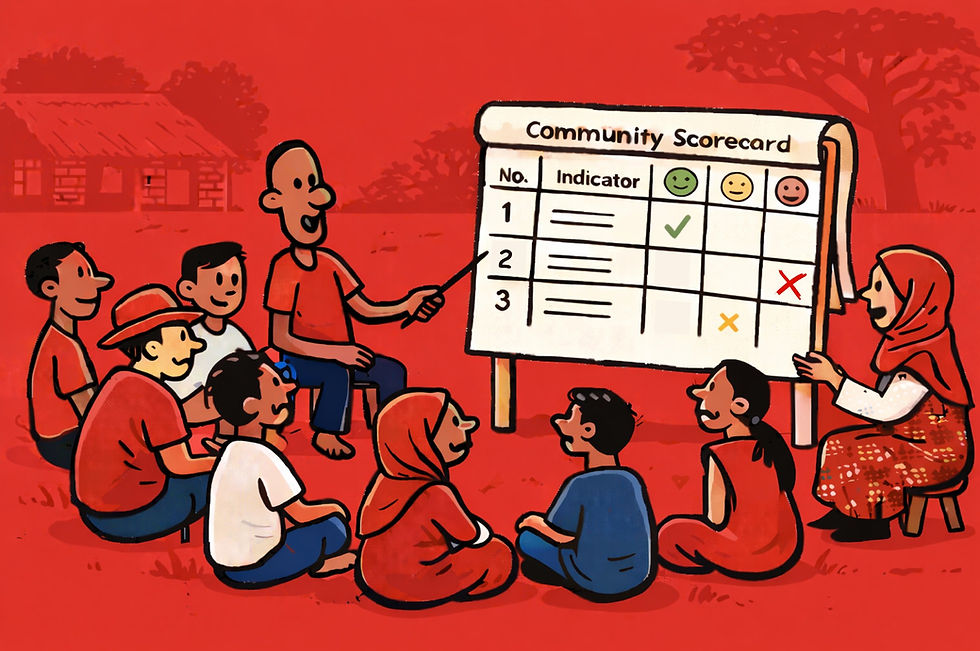
An introduction to key tools from our Social Accountability Toolbox, including Community Score Cards, Citizen Report Cards, Social Audits, Public Hearings, and Public Expenditure Tracking Surveys (PETS).
-
Evidence for advocacy
Understanding social accountability action as part of advocacy — not an end in itself — and learning how evidence generated through these processes can be used to demand better state accountability.
-
From learning to action
Reflecting on next steps and how to integrate social accountability approaches into participants’ ongoing work and advocacy strategies.

lOCALIZATION AND nEW pARTNERSHIPS
Pioneering Pathways to shifting the power
Localisation has become a central commitment in the humanitarian and development sector — yet meaningful implementation remains challenging. This training goes beyond policy statements to explore what it truly takes to shift power, rethink partnerships, and transform organisational practice. Grounded in decolonolization, the Grand Bargain, and real-world experience, the course supports organisations to move from intent to action.
This course is designed for leaders, programme and partnership staff from INGOs, national NGOs, and local civil society organisations. It is particularly effective when international and national partners participate together, enabling joint learning, honest dialogue, and shared ownership of change.
Participants leave with a clear understanding of how power operates within partnerships, practical tools to assess and strengthen their organisation’s readiness for localisation, and concrete strategies to design and implement more equitable, co-creative partnership models that translate localisation commitments into real organisational change.
What this training is about
-
Understanding localisation and decolonolization in practice
Explore the principles behind localisation and decolonolization and what they mean for roles, responsibilities, and relationships between international and local actors. -
Shifting power and transforming partnerships
Analyse power dynamics within partnerships and learn how to design more equitable, co-creative, and mutually accountable partnership models. -
Assessing organisational readiness for localisation
Use practical frameworks to assess readiness on both the international and national side, and identify the organisational changes needed to genuinely implement the localisation agenda. -
From commitments to organisational change
Translate Grand Bargain commitments into concrete organisational shifts, including changes in governance, funding practices, decision-making, and ways of working. -
Learning from trend-setting organisations
Draw inspiration and practical insights from organisations such as ActionAid and Family for Every Child, which are advancing innovative partnership and localisation practices.